
ISO/IEC 17020:2026: Key Changes Inspection Bodies Should Prepare For
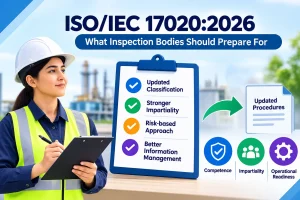
The publication of ISO/IEC 17020:2026 marks an important development for inspection bodies worldwide. The revised standard was published as the successor to the 2012 edition and introduces updated requirements concerning the competence, impartiality, and consistent operation of inspection bodies. Organizations working toward or maintaining accreditation should now review their existing management systems and begin preparing for the revised requirements.
Key Changes in ISO/IEC 17020:2026
One of the significant areas of change concerns the classification and independence of inspection bodies. Inspection organizations should review their organizational structures, independence arrangements, and relationships with other entities to understand how the revised requirements apply to their operations.
The revised standard also places continued emphasis on impartiality and confidentiality. Inspection bodies should identify and address risks that could affect the objectivity of inspection activities. They should also review the controls used to protect confidential information throughout their inspection processes.
Risk-based thinking is another important area for organizations to consider. Inspection bodies should evaluate relevant risks and opportunities associated with their activities and ensure that appropriate controls are incorporated into their management systems. The revised requirements also address areas such as personnel competence, information management, and the use of digital technologies in inspection activities.
Preparation and Documentation Requirements
To prepare for the transition, inspection bodies should conduct a gap analysis between their existing management systems and ISO/IEC 17020:2026. The review should identify areas that may require changes to organizational arrangements, inspection procedures, personnel responsibilities, and information controls.
Inspection bodies preparing for the transition can explore ISO 17020 certification consultancy for support with documentation, implementation, and accreditation preparation.
Organizations should also review and update their quality manuals, documented procedures, inspection forms, records, and internal audit checklists where required. Personnel training should be included in the transition plan so that employees understand the revised requirements and their responsibilities.
Internal audits can help verify whether updated processes have been effectively implemented and are supported by appropriate records and evidence. Inspection bodies should also establish a transition plan that defines responsibilities, target dates, documentation requirements, and actions for addressing identified gaps.
Transition Planning and Accreditation Requirements
The transition to ISO/IEC 17020:2026 will be managed according to the policies and assessment arrangements established by individual accreditation bodies. Inspection organizations should therefore consult their respective accreditation body for applicable transition deadlines, assessment procedures, and evidence requirements.
For example, the United Kingdom Accreditation Service (UKAS) has published transition arrangements for ISO/IEC 17020:2026. Inspection bodies operating under other accreditation systems should review the specific guidance issued by their own accreditation body rather than relying on a single worldwide transition timeline.
Early planning can give organizations sufficient time to review their current processes, update documentation, provide personnel training, conduct internal audits, and address any gaps identified during the transition review.
Conclusion: Preparing for the Revised Standard
ISO/IEC 17020:2026 introduces revised requirements that inspection bodies should consider when reviewing their independence arrangements, risk management, personnel competence, inspection processes, and information-handling practices.
A structured gap analysis, supported by updated documentation, personnel training, internal audits, and an implementation plan, can help organizations monitor their readiness for the revised standard. Inspection bodies should also follow the official transition guidance issued by their accreditation body to understand the applicable assessment process and deadlines.
By beginning the transition review early, inspection organizations can identify areas requiring attention and develop a structured approach toward conformity with ISO/IEC 17020:2026.