
ISO/IEC 27017:2026: Key Changes and What Cloud Service Providers Should Review
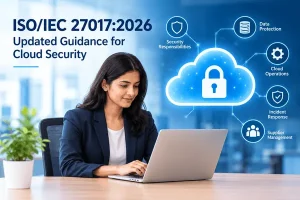
Cloud service providers face a new compliance review priority following the publication of ISO/IEC 27017:2026, the updated edition of the international standard for information security controls in cloud environments. Published on July 27, 2026, the second edition replaces the 2015 version and aligns cloud security guidance with ISO/IEC 27002:2022, reflecting developments in cloud computing and information security management.
The revision is significant for organizations delivering cloud infrastructure, software platforms, hosting services, and managed IT solutions. As businesses increasingly depend on cloud technology, providers must ensure their security controls, contractual commitments, and operational procedures remain appropriate for evolving risks.
A New Chapter in Cloud Information Security
ISO/IEC 27017 provides cloud-specific guidance for both cloud service providers (CSPs) and cloud service customers (CSCs). It complements the wider information security framework by addressing security considerations that arise when information and technology resources operate within cloud environments.
The 2026 edition updates the framework’s relationship with ISO/IEC 27002:2022. Consequently, organizations using the earlier edition should review their existing control mappings and determine whether their current documentation reflects the revised structure. The update also creates an opportunity to reassess how security responsibilities are assigned between cloud providers and their customers.
What Changes Mean for Cloud Service Providers
The revised framework makes a structured review of cloud security arrangements particularly relevant. Organizations should avoid assuming that existing policies automatically address the updated guidance.
Key areas requiring attention include:
- Security responsibilities: Review agreements to clarify which controls are managed by providers and which remain the customer’s responsibility.
- Data protection: Examine information handling, storage, retention, deletion, and access restrictions.
- Cloud operations: Assess administrative procedures, virtual environment security, monitoring, and control implementation.
- Incident response: Review security incident reporting, investigation, communication, and recovery arrangements.
- Supplier management: Evaluate third-party services, subcontractor oversight, and contractual security commitments.
These reviews can help organizations identify gaps before they affect service reliability, customer confidence, or compliance objectives.
Why a Gap Assessment Matters
For organizations already operating an information security management system under ISO/IEC 27001, the revised cloud security guidance provides a reason to examine how cloud-specific controls fit into existing processes.
A gap assessment can compare current practices against the applicable 2026 requirements, identify documentation that needs updating, and establish priorities for corrective action. IT teams, security managers, compliance personnel, and senior management should work together to ensure improvements reflect actual cloud operations rather than documentation alone.
Why a Gap Assessment Matters
Aligning cloud security practices with ISO/IEC 27017:2026 requires a clear understanding of the revised framework and its application to existing operations. Organizations may need support with control assessments, security documentation, and implementation planning to address potential gaps effectively.
To simplify this process, businesses can explore ISO 27017 certification consultancy services offered by Punyam.com. Professional guidance can help cloud service providers understand applicable requirements, strengthen their information security controls, and develop a structured roadmap toward certification readiness.
Why a Gap Assessment Matters
Cloud service providers should obtain the official 2026 edition, compare it with their current controls, assign responsibility for identified gaps, and establish a realistic implementation plan. They should also verify applicable certification and assessment arrangements before announcing compliance or setting transition deadlines.
The updated ISO/IEC 27017 framework signals the importance of keeping cloud security practices aligned with current guidance. For providers and customers alike, reviewing controls now can support clearer accountability, stronger risk management, and greater confidence in cloud service delivery.